

Amarja: residential brand programme by BigBrandTheory
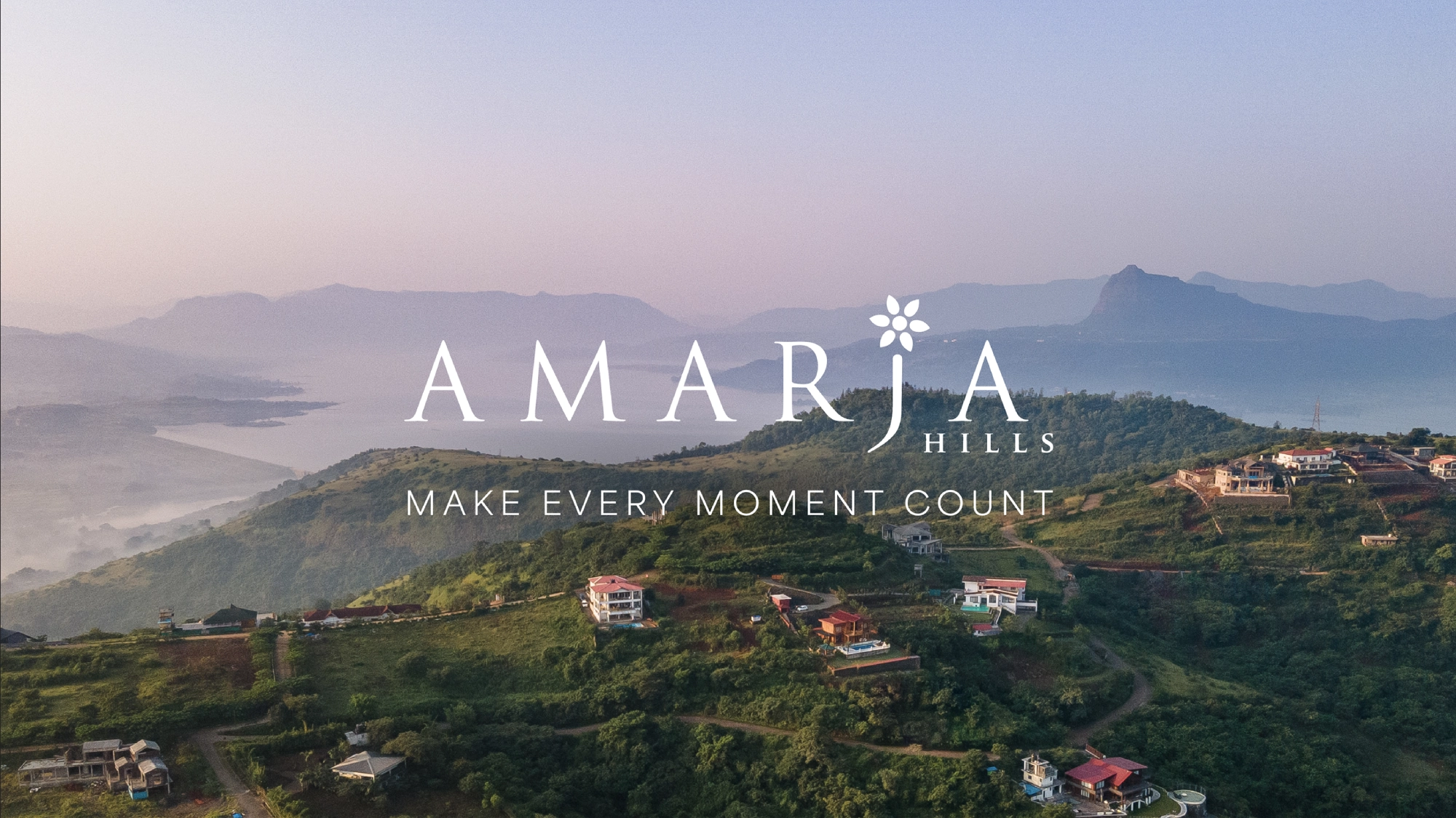
Luxury real estate · Farmhouse and land · Lonavala, Maharashtra
Naming Amarja Hills, and holding it for fifteen years.
A hill estate above Pawna Lake, named on the land itself, and stewarded through every change the business has made since.
Amarja Hills is a gated luxury hill estate on Mahagaon Road above Pawna Dam, between Mumbai and Pune. Title-clear plots from one to five acres, custom villas in four architectural styles, and seven amenities including an operational private helipad.
BigBrandTheory named it after a site visit and has been its brand custodian ever since. In those fifteen years the estate has grown from 300 acres to 500, added a construction arm and a hospitality business, and the brand has never been redrawn.
15 years as brand custodians · 500 acres · 3 businesses, one name · No rebrand in fifteen years
- Luxury real estate branding
- Brand naming
- Brand strategy
- Positioning
- Visual identity
- Brand architecture
- Sales and marketing communication
- Digital
- Brand custodianship
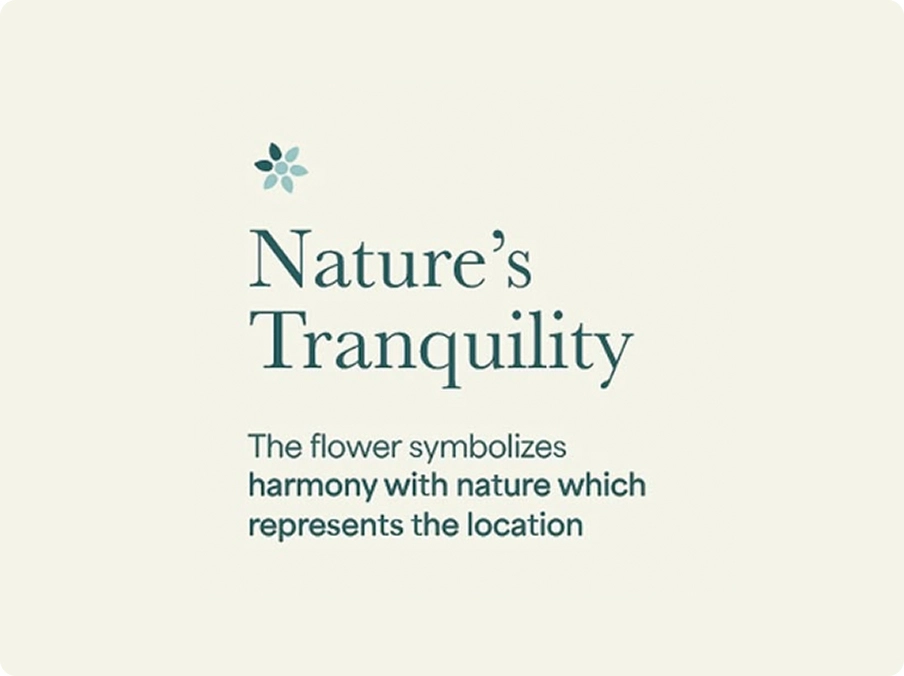

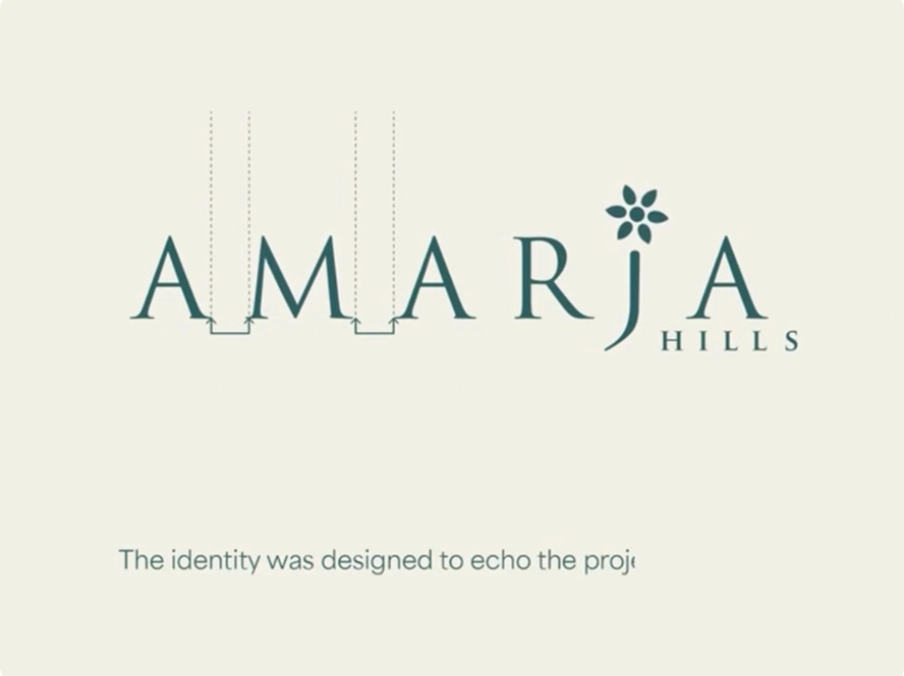
The name came from the site, not the studio
Most project names are written in a room, from a brief, against a map. They are competent and they are interchangeable, which is why the category is full of Greens, Heights, Valleys and Vistas.
We went and stood on it first. The land above Pawna, the water below it, the way the Sahyadris hold the light in the evening.
You cannot name a place you have not been to
A name written from a brochure describes a specification. A name written from the land describes what it feels like to be there, which is the thing the buyer is actually paying for.
Amarja came out of that visit. Fifteen years later it still fits a business that has changed shape three times, which is the only real test a name ever gets.
Luxury real estate branding when the product is land
Selling a home and selling a plot are different acts. A home can be shown. A plot has to be imagined, and the buyer is being asked to picture something that does not exist and may not for years.
So the brand could never be about the asset. One acre of title-clear non-agricultural land is a document, and documents do not move anybody.
What a buyer is actually purchasing
They are buying a decision about how weekends will feel for the next thirty years. Who the neighbours are. Whether the children will want to come back.
The brand was built to carry that rather than the specification, which is why the plot tiers are named the Garden Plot, the Estate Plot and the Legacy Estate rather than by their acreage.
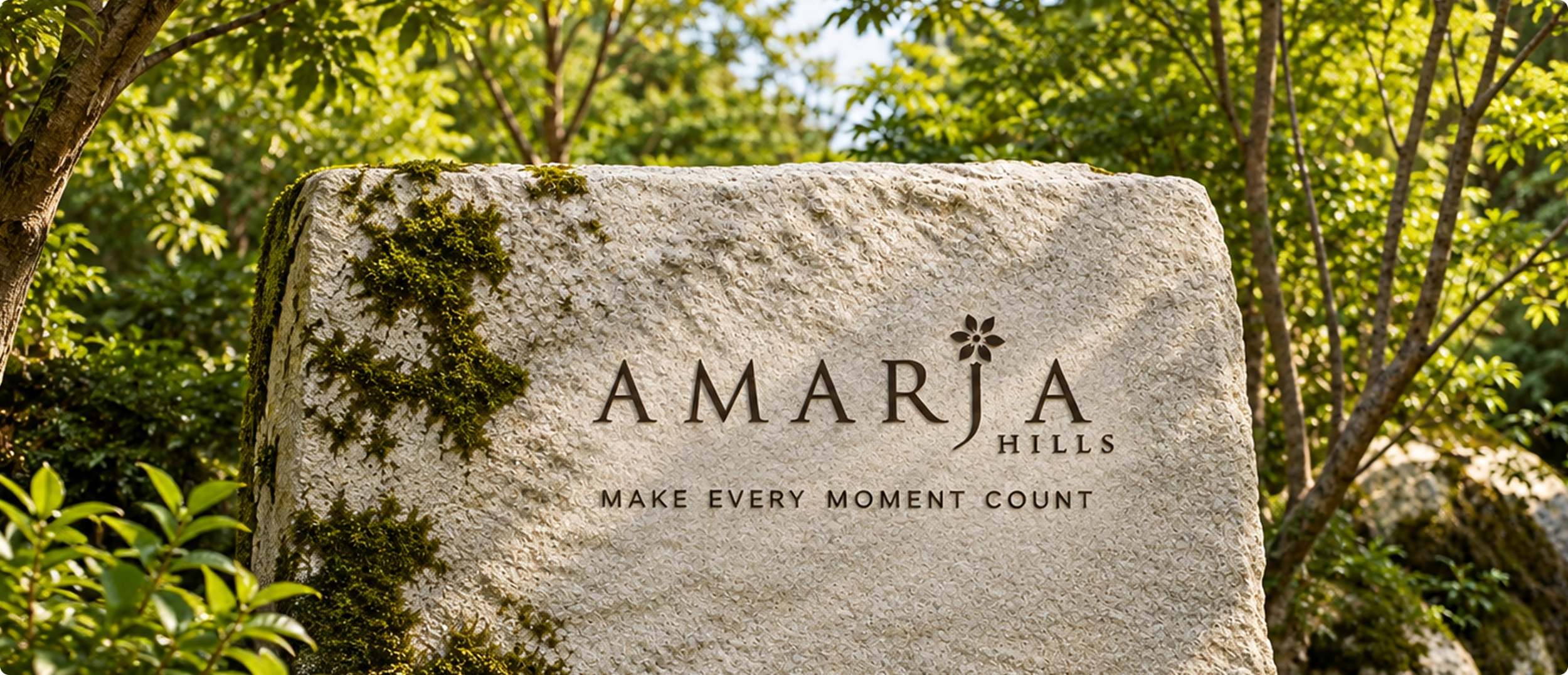
From 300 acres to 500
When we named it, Amarja was 300 acres in the Sahyadris with plots from half an acre upward and a few dozen villas.
It is now 500 acres with plots up to five, four architectural styles from modern RCC to Russian log houses and Portuguese villas, and seven amenities with more under construction.
A brand that grew without being redrawn
That scale of change usually triggers a rebrand, because the original identity was built to describe what existed at the time rather than what the business might become.
Amarja absorbed all of it. The same name, the same position, the same promise, applied to a project that more than doubled.
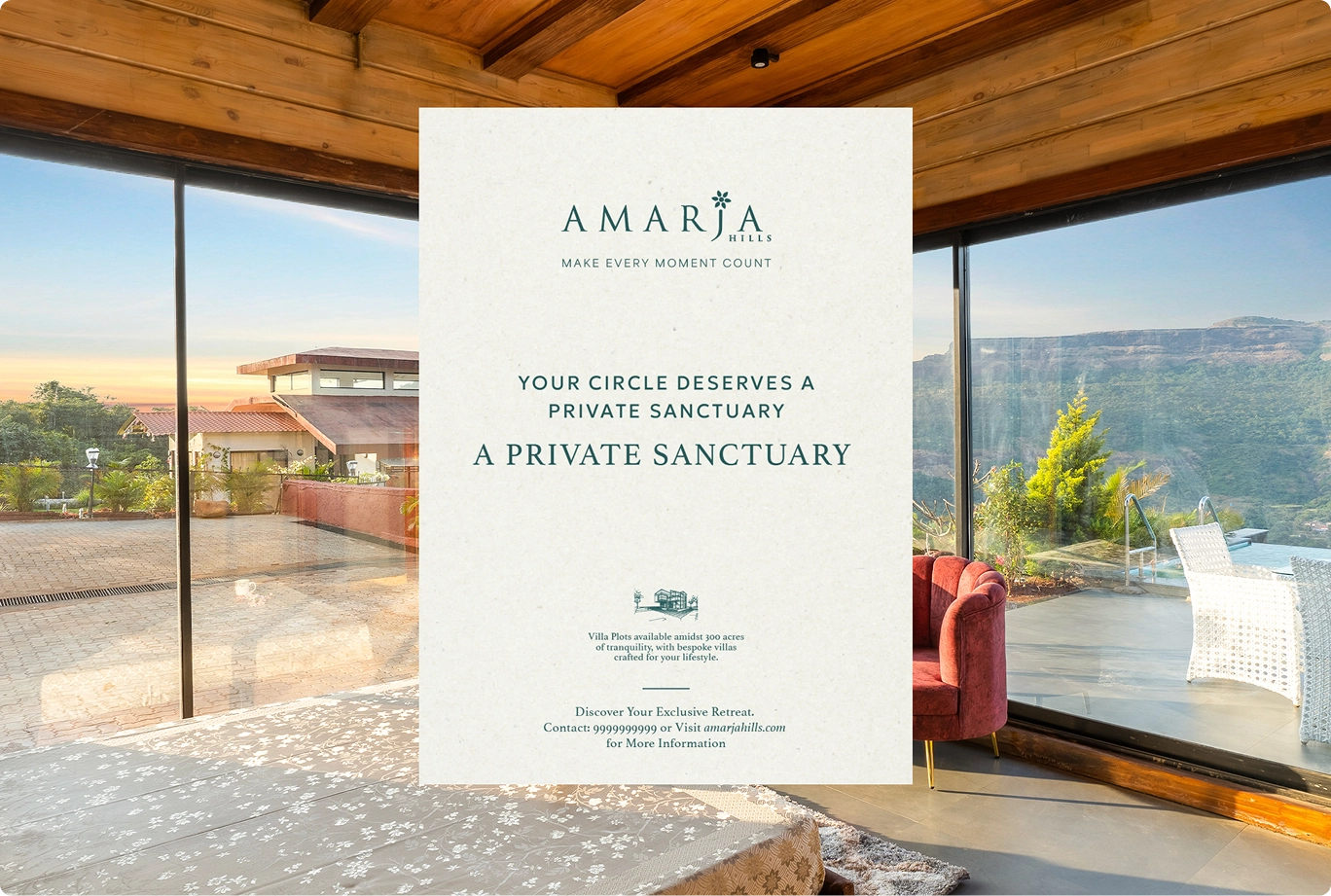

One estate, three businesses
Somewhere in those fifteen years, Amarja stopped being only a land business.
It builds now, under Built by Amarja, taking a buyer from a plot to a finished villa in the style they choose. And it hosts, through Amarja Experience, renting villas and wooden chalets to people who have not bought anything yet.
Brand architecture, built as the business arrived at it
Each of those could have become its own brand with its own identity and its own marketing, which is how most developers end up with three logos and one confused customer.
Instead they sit under Amarja as an estate, a builder and an experience, which means a weekend guest is already inside the sales funnel without being sold to.
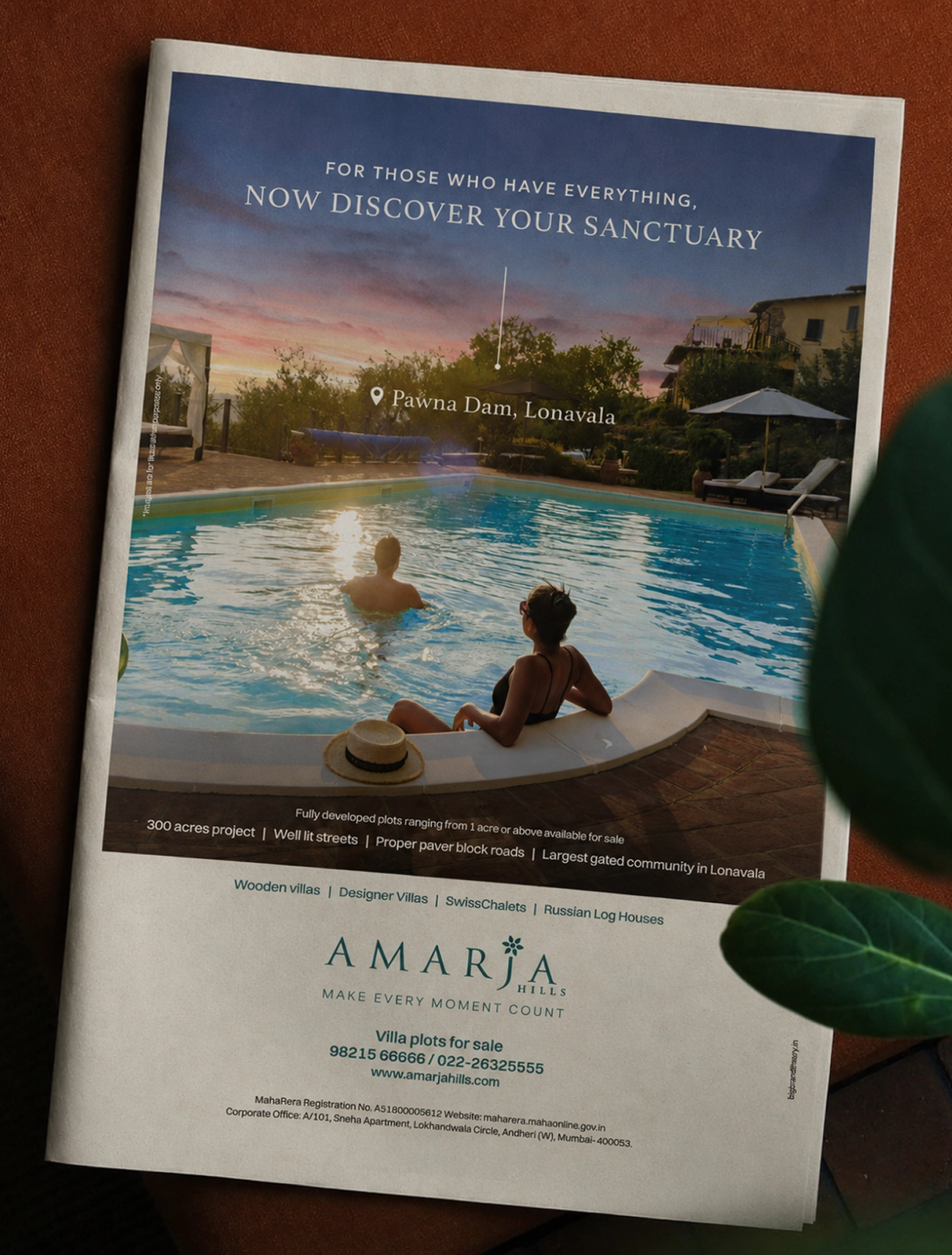
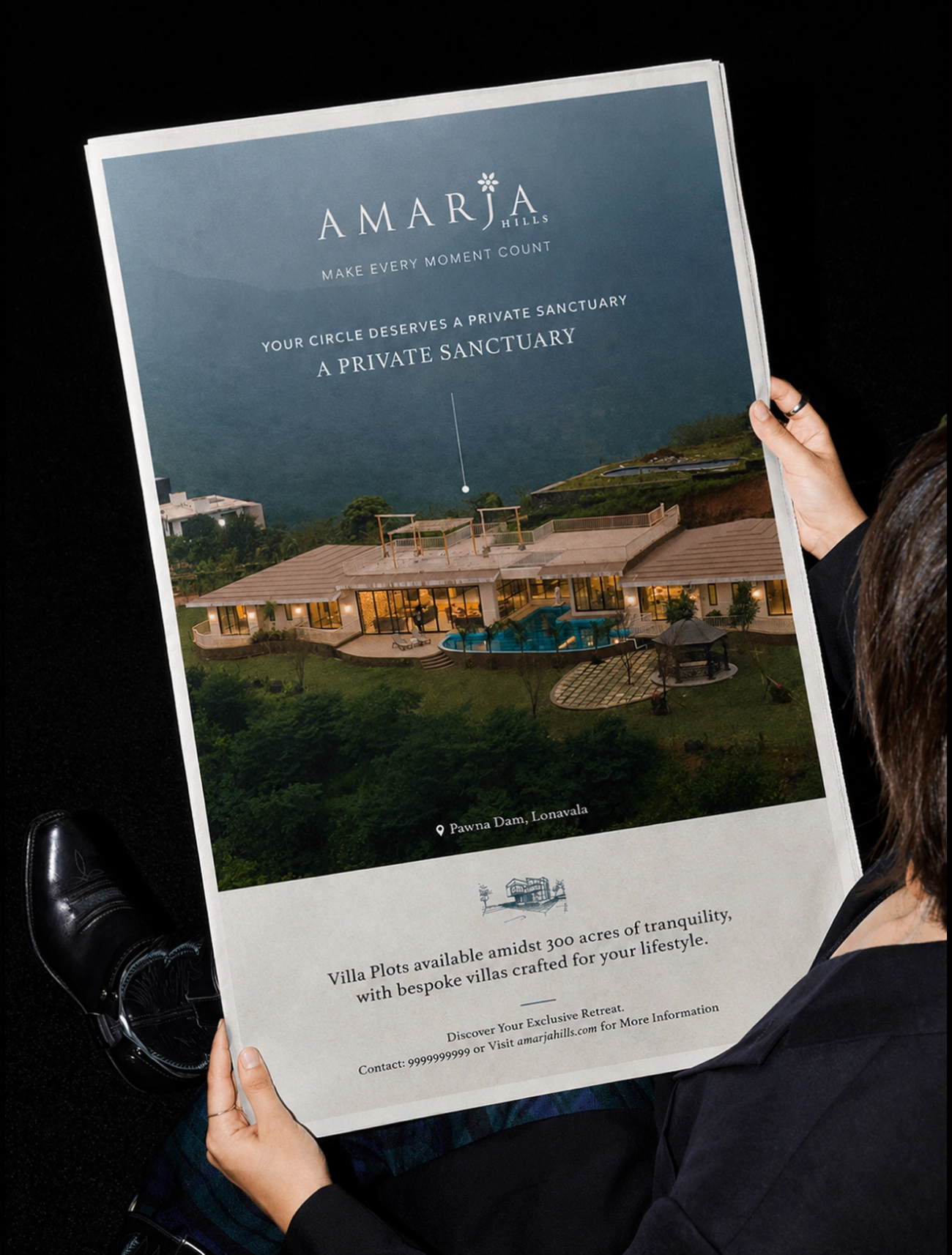
Fifteen years as brand custodians
Custody is the part of brand work nobody photographs. No launch, no reveal, no case study moment.
It is the quiet governance of every decision a growing business makes: a new villa style, a new amenity, a new sub-brand, a new campaign, each one either strengthening the brand or spending it.
What custody actually looks like
It looks like being in the room when the helipad gets approved and asking what it means for the positioning. It looks like saying no to a logo for the rental business.
Fifteen years in, the clearest evidence it worked is a negative. There has been no rebrand, no reset, no moment where the business outgrew its own name and had to start again.
We named a piece of land in the Sahyadris and then stayed with it, through three hundred acres becoming five hundred, a land business becoming a builder and a host, and a name that has not needed to change once.
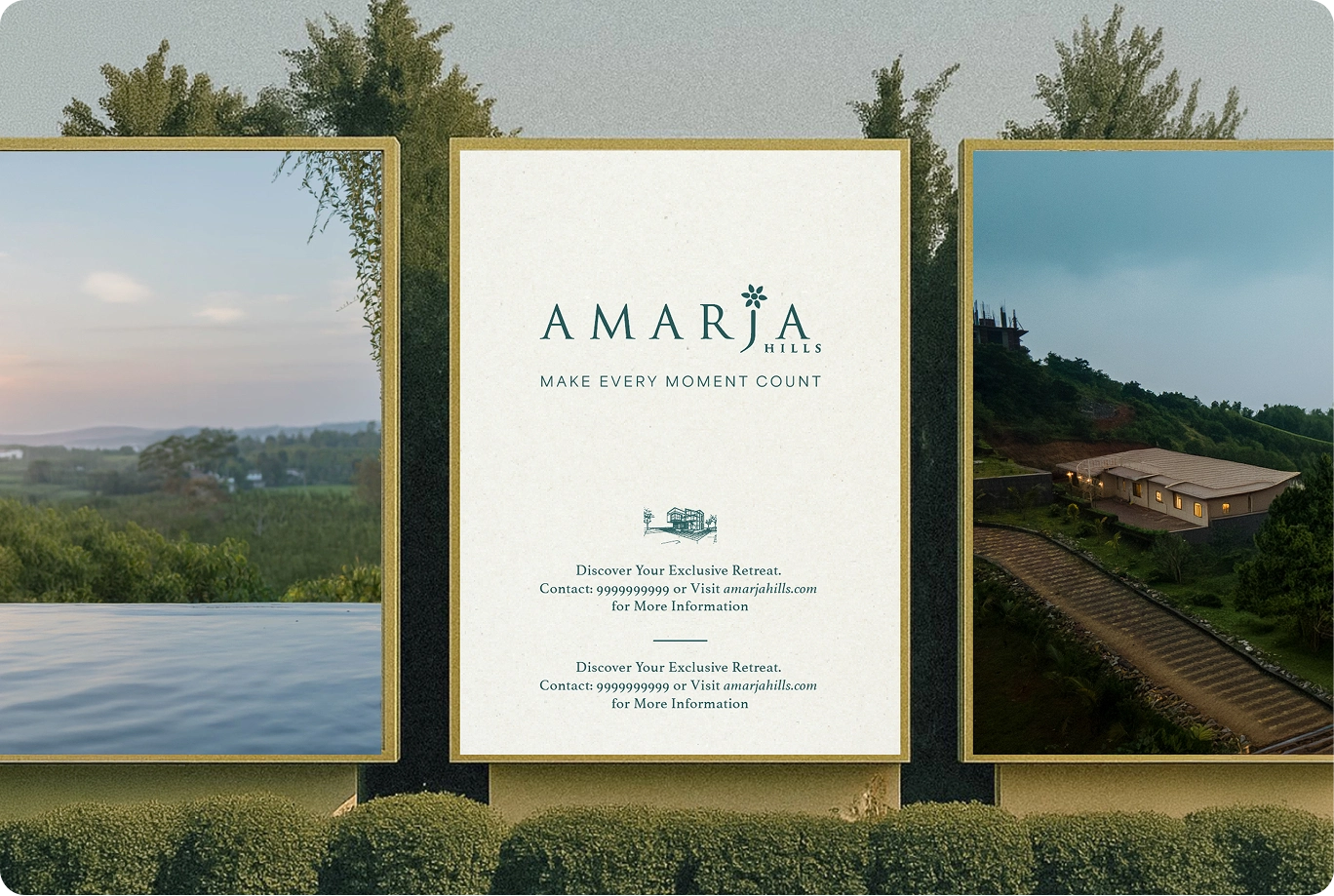
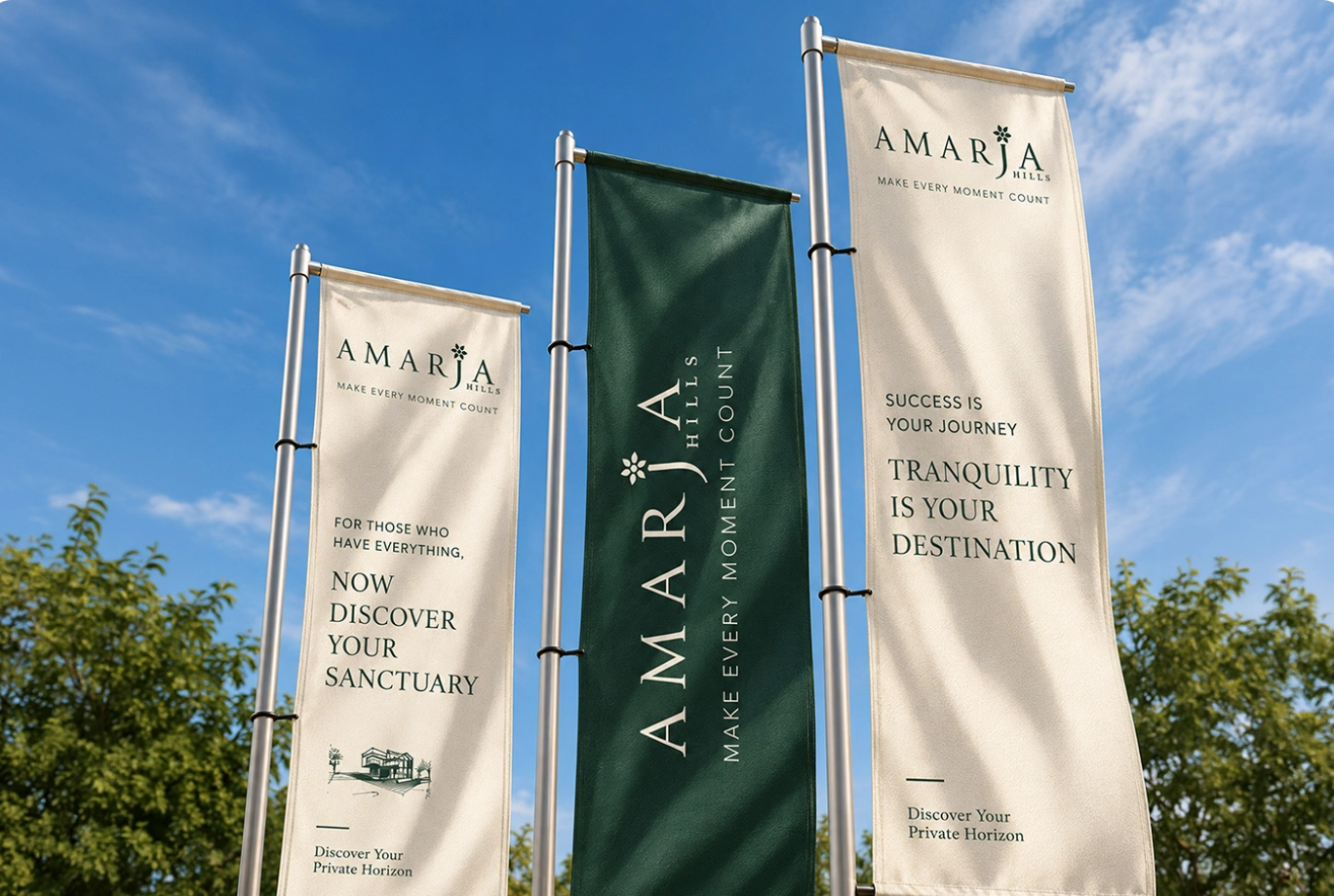
A name that outlasted the business it was written for.
Frequently asked
What is Amarja Hills?
Amarja Hills is a gated luxury hill estate and farmhouse project on Mahagaon Road near Pawna Dam, Lonavala, Maharashtra, developed by Nanak Properties. It spans around 500 acres with title-clear plots from one to five acres, custom villas in four architectural styles, and seven amenities including an operational private helipad. It is about 99 km from Mumbai and 49 km from Pune.
What did BigBrandTheory do for Amarja Hills?
BigBrandTheory named Amarja Hills following a site visit and has been its brand custodian for fifteen years, covering brand strategy and positioning, the visual identity, the brand architecture across Amarja Hills, Built by Amarja and Amarja Experience, sales and marketing communication, digital, and the ongoing governance of the brand as the business has grown.
How do you brand a land or plotted development?
By selling the life rather than the asset. A plot cannot be shown, so the buyer is being asked to imagine something that does not exist yet. Amarja’s plot tiers are named the Garden Plot, the Estate Plot and the Legacy Estate rather than by acreage, because the decision being made is about the next thirty years of weekends, not about square footage.
What is brand custodianship?
Ongoing senior governance of a brand as the business changes, rather than a project with a handover. On Amarja that has meant fifteen years of decisions about new villa styles, new amenities and new sub-brands, each judged against the same position. The result is that an estate which more than doubled in size has never needed a rebrand.
Why do growing developers end up rebranding?
Usually because the original identity described what existed at the time rather than what the business might become, so every expansion strains it until something has to give. A brand built on a position rather than a specification can absorb growth. Amarja went from 300 acres to 500, added a construction business and a hospitality business, and kept the same name.
Who does branding for luxury real estate and land projects in India?
The work spans naming, positioning, identity, the architecture across sub-brands, and the long-term custody that keeps a growing project coherent. BigBrandTheory works on real estate branding across India and Sri Lanka, and has been brand custodian of Amarja Hills near Lonavala for fifteen years.